The press-on nail renaissance has completely transformed at-home manicures. From viral TikTok trends featuring boutique brands like Chillhouse press on nails, Celebritips, and Nail Reformation press ons, to everyday favorites like Color Street press on nails, Kiss Core press on nails, and Doonails, artificial tips are no longer seen as flimsy plastic stickers.
Yet, a persistent myth keeps many from making the switch: “Don’t press-ons destroy your natural nail bed?”
If you have ever peeled off a set only to find chalky, peeling, paper-thin tips underneath, it is easy to assume the faux nails themselves did the damage. But the truth is far less dramatic. Press-on nails do not ruin your nails—improper prep, aggressive application, and violent removal do.
The Core Question: Can Press-Ons Damage Your Natural Nails?
The short answer is no. Whether you wear salon-sculpted gel press on nails, durable acrylic press on nails, or everyday reusable press on nails, the materials (typically medical-grade ABS plastic or cured soft gel) sit harmlessly on top of your nail plate.
Unlike traditional salon enhancements that require mechanical drilling, harsh dehydrating primers, or rough e-files directly against your natural keratin layer, press-ons preserve the structural integrity of your nail plate—provided you handle them with care.
The Real Culprits Behind Nail Damage
When damage occurs, it almost always stems from mechanical trauma rather than chemical exposure:
- Aggressive, Forceful Removal: Tearing or prying off a tip pulls away the dorsal keratin layer of your natural nail bed, leading to immediate thinning, roughness, and sensitivity.
- Over-Buffing During Prep: Lightly removing surface shine improves adhesion, but aggressive buffing strips away protective nail layers before you even apply glue.
- Using Low-Quality or Industrial Adhesives: Stick strictly to cosmetic-grade cyanoacrylate formulas designed for nail use.
- Ignoring Moisture and Oil Hygiene: Water trapped under a lifted nail can create a breeding ground for bacterial or fungal infections (often called “green nail syndrome”).
Understanding Nail Anatomy & Safe Application
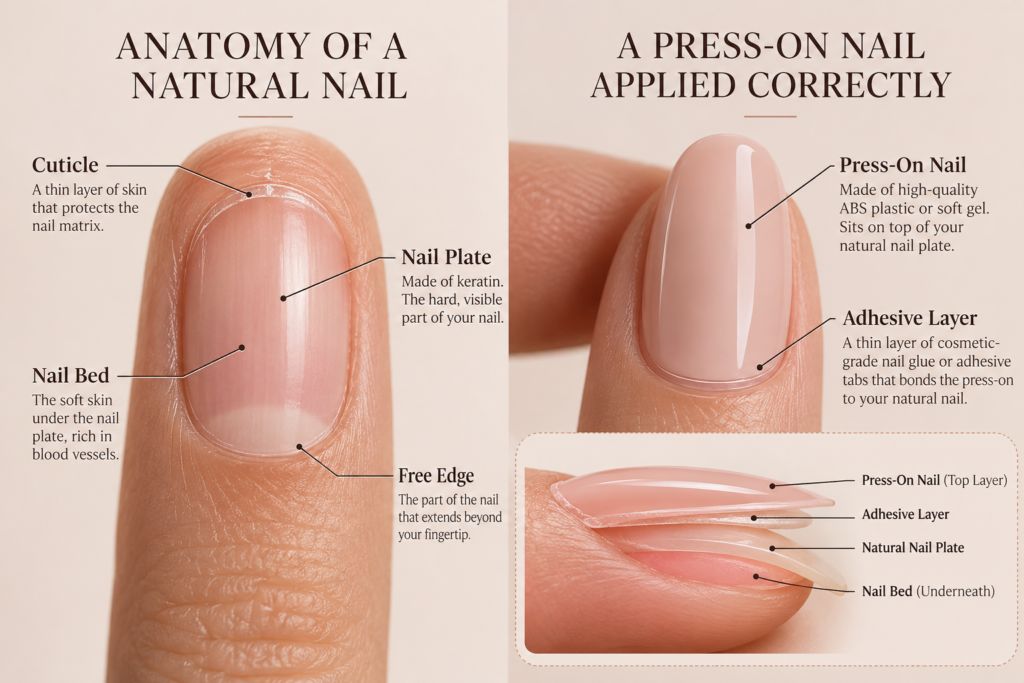
To understand why press-ons are safe, look at your nail anatomy. The nail plate consists of compacted, dead keratin cells. Applying an adhesive over this surface creates a surface bond. When you use proper removal methods to break that bond chemically, the nail plate remains completely undisturbed.
Myth vs. Reality: Press-On Nails Breakdown
To clear up the confusion between salon hearsay and reality, here is how the most common press-on nail myths hold up against everyday wear:
| Myth | Reality | Prevention & Best Practice |
|---|---|---|
| “Press-ons make your natural nails thin and brittle.” | The tips themselves do zero structural harm. Damage occurs when nails are ripped off dry instead of dissolved. | Always learn how to soak off press on nails using warm water, oil, and soap before attempting removal. |
| “Nail glue is inherently toxic and permanently ruins the nail plate.” | Cosmetic nail glue bonds to surface keratin and naturally loosens over 1–3 weeks as oils break it down. | Never pick hardened glue. Learn how to remove nail glue from press on nails and natural beds using gentle buffing and cuticle oil. |
| “Long or dramatic shapes cause unavoidable nail breakage.” | Heavy tension on improperly fitted shapes can bend your natural nail, but correct sizing prevents strain. | Match your lifestyle: opt for short press on nails, almond press on nails, or natural press on nails if you do heavy hands-on work. |
| “Press-on nails trap moisture and rot your real nails.” | Trapped moisture only happens when a lifted edge is ignored rather than repaired or re-glued. | If an edge lifts, remove the nail entirely, sanitize the surface, and reapply rather than leaving a gap. |
| “You can’t reuse press-ons if you use strong nail glue.” | High-quality acrylic and gel-cured tips can easily be cleaned and worn again. | Soak off gently and buff away residue to keep your reusable press on nails intact for multiple wears. |
4 Rules to Keep Your Natural Nails Healthy While Wearing Press-Ons
Follow these steps to enjoy custom sets without risking thin, peeling nails:
1. Prep for Longevity Without Over-Filing
Push your cuticles back gently, clean the nail bed with a 70% isopropyl alcohol wipe to remove natural oils, and use a fine 240-grit buffer for no more than 2–3 light passes. Avoid rough emery boards on the center of the nail plate.
2. Match the Length and Shape to Your Daily Routine
A common mistake is choosing high-tension shapes that don’t fit your daily lifestyle:
- Low-Maintenance Daily Wear: Stick to short press on nails, medium press on nails, classic square press on nails, or round/natural press on nails.
- Occasional & Statement Glam: Flaunt long press on nails, dramatic coffin press on nails, or stiletto press on nails for weekend events or photoshoots, ensuring you distribute pressure evenly across your finger pads rather than using nail tips as tools.
- “Whether you prefer everyday minimalism or statement-making styles,explore our press-on nail collection to find the perfect set for your routine.”
3. Choose the Right Adhesive for Your Wear Goals
- Adhesive Tabs: Best for 1–3 day wear (e.g., matching a theme like press on nails halloween, halloween nails, or christmas press on nails). Zero damage, virtually instant removal.
- Press On Nails with Glue: Best for 1–3 weeks of wear. Ensure complete coverage without air pockets to prevent lifting.
4. Master Safe, Non-Damaging Removal
Never rip a tip off, no matter how loose it feels at the base.
- Fill a bowl with warm water, gentle dish soap, and a generous splash of olive oil, cuticle oil, or baby oil.
- Soak your fingertips for 15 to 20 minutes until the adhesive bond naturally dissolves.
- Gently rock the nail tip side to side using an orangewood cuticle stick. If there is resistance, soak for another 5 minutes.
Frequently Asked Questions
How do you take off press on nails with glue without causing damage?
To learn how to take off press on nails with glue safely, avoid pure acetone if you plan to save the set. Instead, soak your hands in a bowl of warm water mixed with dish soap and cuticle oil for 15–20 minutes. The oil and soapy water break down the adhesive seal so the nail lifts off easily without stripping your natural keratin layer.
How do I remove leftover nail glue from my natural nails and press-ons?
To understand how to remove nail glue from press on nails for future wear, let the tips dry completely after removal, then gently buff the hardened glue off the underside using an e-file bit on low speed or a manual buffer. For your natural nails, apply a drop of nourishing cuticle oil and lightly buff the remaining residue using a high-grit sponge buffer block.
Are press-ons safer than salon acrylics or hard gel?
Yes. High-quality press on nails eliminate direct e-file filing and extensive acetone exposure. Because they act as a protective shield over your natural nail bed, they are often used by nail artists to let damaged nails grow out safely.
How do I choose between different finishes and styles?
Finishes like french tip press on nails, glitter press on nails, or matte press on nails have no impact on natural nail health. Select your finish based on your personal aesthetic, but ensure the base tip is sized edge-to-edge across your natural sidewalls for a balanced fit.
From understated everyday looks to bold statement sets, find your perfect press-on nail design and switch up your style whenever you want.
Conclusion
Press-on nails do not ruin your natural nails—impatience does. When applied cleanly and removed with a gentle soak rather than brute force, press-ons serve as one of the safest, most versatile manicure alternatives available. Whether you’re rotating festive sets or rocking everyday short neutrals, your real nails can remain just as long, thick, and healthy underneath.